The 17th Sunday after Pentecost
September 20, 2026
At Seekers, we have entered Recommitment Season. This is the period of time leading up to Recommitment Sunday (the third Sunday in October) during which members of Seekers are invited to examine their commitment to Seekers and decide whether they are called to recommit to Seekers for another year. Today I want to talk about what commitment means at Seekers Church and the role mission groups play in commitment.
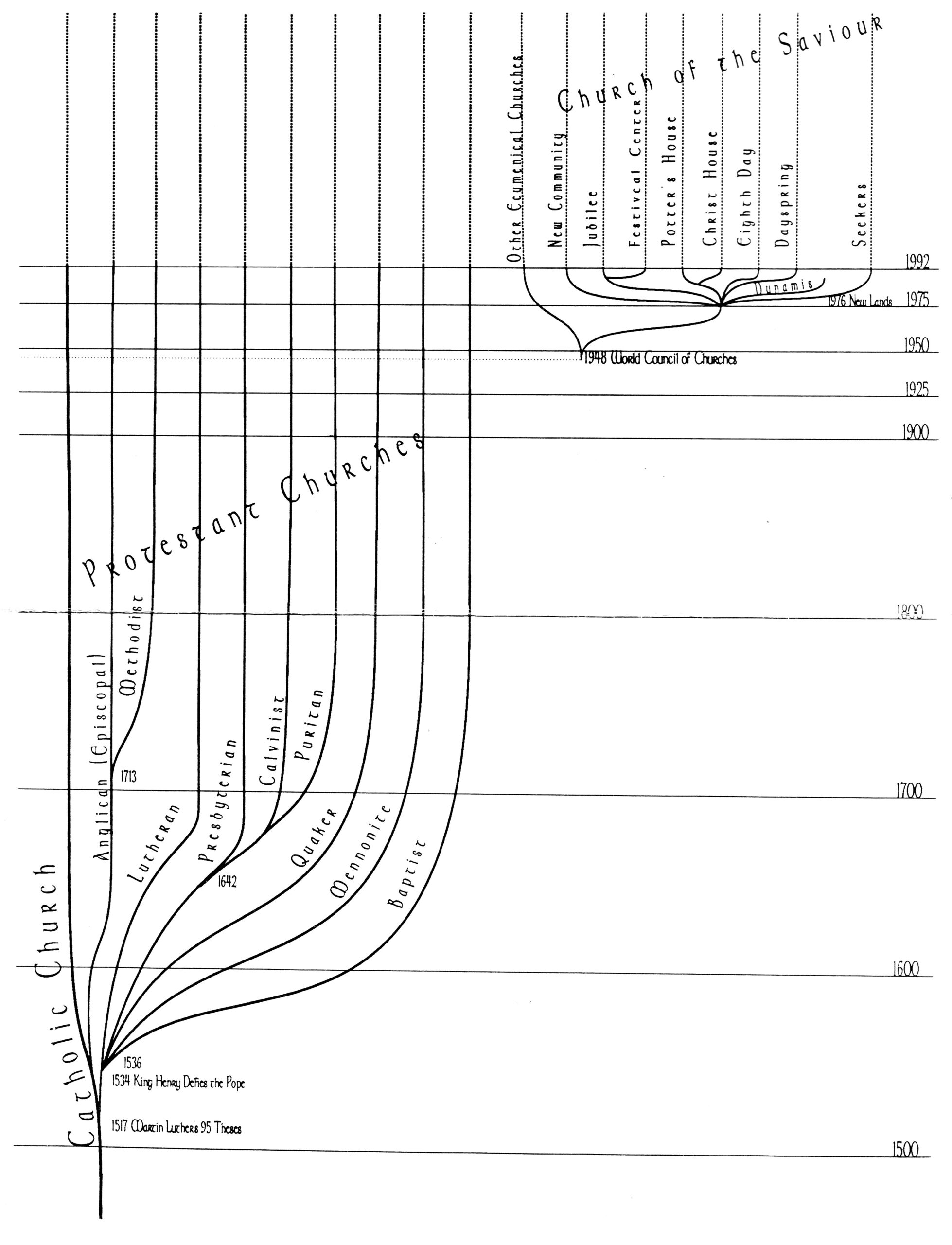
The first thing I did when I started preparing this sermon was to look back at Elizabeth O’Connor’s book, Call to Commitment. She wrote this book in 1963 as a member of the Church of the Saviour, from which Seekers evolved. Rather than treating church primarily as a place to attend worship, the Church of the Saviour understood it as a community where people discerned their call, made commitments, and supported one another in living them out. Its members formed small groups and specialized ministries, including work with people experiencing poverty, homelessness, and other forms of marginalization. Seekers has maintained these traditions.
For O’Connor, call is not necessarily a dramatic religious experience. We don’t need a burning bush or a voice booming from the heavens to experience call. Call may emerge through an attraction to a particular kind of work, a concern for other people, a growing sense of responsibility, or an awareness that one’s life is being drawn toward something larger than personal comfort. I have recently learned a lot from reading Parker Palmer’s book, Let Your Life Speak. For Palmer, call has to do with getting to know yourself, your gifts, and your limitations. Instead of coming from the outside, it rises up from the inside and is probably revealed by what you are already doing. I have been taking Marjory’s class, What Is My Call Now, and I’m realizing that I have already found my call both in my daily life and in Seekers. My call is described in the name of the mission group I have belonged to at Seekers for over 25 years: Learners and Teachers. My gifts and great sources of joy are, and always have been, learning and teaching.
The important question about call is whether a person is willing to respond. A call becomes meaningful when it leads to a commitment that requires time, energy, sacrifice, and perseverance. At Seekers, commitment is more than just deciding to belong to a church or agreeing to take on responsibility. It is a decision to give our lives to something larger than ourselves. O’Connor’s understanding of commitment is inseparable from community because in community a person does not have to discern everything alone or depend entirely on individual inspiration. A spiritual community can help people recognize their gifts, test their sense of call, and discover how their lives might serve others. But community also makes commitment more demanding. It requires people to live with differences, accept responsibility, and remain faithful when relationships become difficult or when the original enthusiasm fades.
In Seekers, our annual Recommitment Season is more than just a time to renew our membership. It is a time to ask questions like:
- What am I being called to do and to become?
- What commitments have I made to help me live out that call?
- Am I willing to place myself in the care of a community?
- What does my community need from me, and what do I need from it?
- How do I remain faithful when commitment becomes difficult?
Like the original Church of the Saviour, at Seekers, we talk about the inward spiritual journey and the outward journey of service. But there is also a third journey: the community journey. Mission groups bring all three together. Through working together, we become more fully the people we are called to be. The challenge of mission groups is that this kind of belonging requires time, vulnerability, and accountability. The reward is finding a community where you can both give of yourself and be given to. To commit seriously to a spiritual community means letting it become part of how you live your life, not simply where you go on Sunday mornings. It means offering your time, gifts, presence, and willingness to grow, while accepting that belonging involves responsibility to other people.
When I first came to Seekers Church, I found the degree of commitment required intimidating. Did I really want to commit that much to something I had always thought of as happening only on Sunday mornings? I grew up Episcopalian, and that definitely was a once-a-week thing in my family, if that. But I found a lot that was appealing in the Seekers concept of commitment. When I saw it play out in how Seekers spoke to and interacted with one another, I could definitely see the benefits of making such a wholehearted commitment.
Mission groups are central to commitment at Seekers Church. Participating in a Seekers mission group is the way to move from attending worship to becoming a member of Seekers, sharing responsibility for the life and mission of the church. It offers the opportunity to discover what commitment means through actual relationships, work, and service.
Belonging to a mission group can be demanding. Mission group meetings, preparation, and tasks become part of your life, but other responsibilities compete for your time. Mission groups also bring together different personalities, convictions, and ways of working. Disagreements can be uncomfortable. Reaching decisions may take time. Sometimes the hardest part of commitment is not the work itself, but remembering that other people have worthwhile ideas, too, and sometimes they are quite attached to them. We must practice listening, patience, and trust rather than simply trying to make things go our own way. Serious commitment does not mean agreeing with everyone or remaining in a community regardless of harm. But it does mean being willing to work through ordinary disagreements, difficulties, and disappointments.
My mission group is a pretty agreeable bunch, so we don’t have much in the way of actual conflict. But we do have disagreements that require us to let go of the need to be right and work toward a solution that everyone is comfortable with or can at least tolerate. Quakers have a term for the latter: “standing aside.” Standing aside occurs when a member who has personal reservations or disagrees with a proposed decision chooses not to block it, allowing the group to move forward together. We begin our weekly meetings with a meditation and a prayer, then we get down to the business at hand. We close with personal sharing and end with a reading from the Scriptures and another prayer. My mission group is a reliable and treasured source of emotional and spiritual support for me.
Though there are challenges, mission group membership brings many gifts. Here are some of them:
- A deep sense of belonging – In mission groups, we are known not just as someone who attends worship, but as a person whose gifts, struggles, and spiritual journey matter to others.
- Discovering our gifts and call – Working with others can help us recognize abilities and callings we might not have discovered on our own.
- Spiritual growth through relationship – A mission group gives us companions for prayer, honest reflection, and discernment. It is not merely a place where our existing beliefs are confirmed. It can challenge us, expose our limitations, and invite us to become more loving, courageous, and open. Commitment means being willing to grow through those experiences.
- Giving ourselves to something larger than ourselves – In a mission group, we discover that our lives are not only about our own needs, our own interests, or our own spiritual growth. We have something to give, and our gifts are needed. We become part of a shared call. We take responsibility for something that belongs to the whole community, and through our time, our energy, and our care, we help make that community possible. We dedicate ourselves to work we could not do by ourselves alone. And in that giving, we receive something we cannot give ourselves: the experience of belonging to something larger, of being part of a continuing life of faith and service that will go on beyond any one of us. Our individual lives become part of the life of the church, and the life of the church becomes part of the healing of the world.
- Putting ourselves in the care of others – This is perhaps the deepest meaning of commitment at Seekers. We are not promising to do everything alone. We are entrusting part of our spiritual life to a community that can support us, challenge us, and walk with us through times of uncertainty or difficulty. It also means accepting responsibility for caring for others. Belonging becomes mutual: we allow ourselves to be cared for, and we become someone others can depend on.
Poetry is a big part of my spiritual life. I love how a poem can express complicated realities and insights in a deceptively simple manner, and how its ending can surprise us and take us somewhere deeper than we expected. In my mission group, Learners and Teachers, each week I search the internet for a poem related to the lectionary readings for the coming Sunday and read it for the opening meditation. Or, if I can’t find one I like, I write one myself. I think selecting and writing poems is one of the gifts I bring to Seekers. So, I want to end today by reading a poem I wrote about commitment.
The Gift of Commitment
A church that asks for little
may give us a place to sit.
A church that asks for a great deal
can give us a place to belong.
Not because we agree on everything
or share the exact same beliefs,
but because we have chosen
to place ourselves in one another’s care.
We bring our gifts,
our doubts,
our unfinished lives,
and the willingness to stay
when staying is difficult.
We learn that belonging
means being known and
being open to change.
It is a gift to be needed,
to know our presence matters,
and that our work and prayers
are part of something larger than ourselves.
And when we grow tired,
or wonder whether we have given enough,
the church reminds us
that we are not here
to earn our place.
We are here because we have been welcomed,
and because we have chosen
to welcome one another.
The gift is not a church
that makes life easier.
It is a people
who will walk with us
through the hard places,
and a community where,
even when we have nothing to offer,
we can still come home.