Seekers recognizes that any member of the community may be called upon by God to give us the Word, and thus we have an open pulpit with a different preacher each week. Sermons preached at Seekers, as well as sermons preached by Seekers at other churches or events, are posted here, beginning with the most recent.
Click here for an archive of our sermons.
Feel free to use what is helpful from these sermons. We only ask that when substantial portions are abstracted or used in a written work, please credit Seekers Church and the author, and cite the URL.
“Do You Hear It Too?” by Will Ramsey
 February 25, 2018
Second Sunday in Lent
Twelve years ago, in my men’s group, I created a mission statement which continues to resonate deep within my soul. The mission is: “I will use my compassionate voice to inspire others and myself and I will build connections of trust.” It’s through the lens of trust building that I speak to you today. Celebration Circle’s suggested theme for Lent is “the foolishness of faith.” This is a great theme for what I have to say today because I believe that this very foolish faith is necessary for us to hear God’s calling in each of our lives and God’s calling to us collectively.
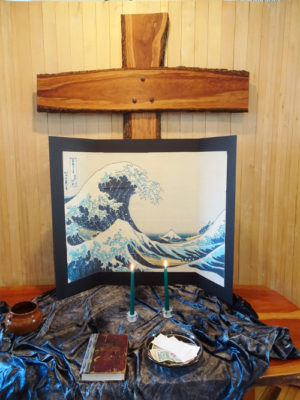
A Service in the Style of Taizé for Lent 2018
 February 18, 2018
First Sunday in Lent
“Me Too” by Deborah Sokolove
 February 11, 2018
Transfiguration Sunday
Today we read the story that is usually referred to as the Transfiguration of Jesus. What does it mean to be transfigured? A quick check of the online etymology dictionary https://www.etymonline.com/word/transfigure tells us that it comes from Latin transfigurare “to change the shape of.” It is derived from the familiar prefix trans, meaning “across” or “beyond” plus the verb figurare “to form or fashion.” To transfigure, then, is to change something or someone beyond what it was into something new and better.
A Sermon on Gratitude by Larry Rawlings
February 4, 2018
Fifth Sunday after the Epiphany
Larry spoke about changes in his life, honesty, and doing the next, right thing. Retelling the Gospel reading about Jesus healing Peter’s mother-in-law, he said that all of us more readily think about God when we are in need than simply being grateful all the time. So often we look in the wrong places for happiness and salvation from our troubles. Christians should know better, he said. Jesus tells us to go out and live in service and in peace, and to thank God for our very lives.
“Naked Lunch” by John Morris
January 28, 2018
Fourth Sunday after the Epiphany
My sermon this morning is about metanoia, a sudden moment of waking up after which we can never see the world in the same way. I’m going to use the passage from 1st Corinthians as a jumping-off place to think about this. And since Paul in this reading has also invited us to think about the meaning of what we eat, I’m going to go ahead and do that too.
Metanoia is a Greek word that means “change of mind.” It shows up fairly often in the New Testament, and is usually translated as “repentance.” In Luke, for instance, when Jesus says, “It is not those who are well who need the doctor, but the sick. I have not come to call the righteous, but sinners to repentance,” the word for repentance is metanoia. So how does “change of mind” become “repentance”?