October 19, 2025
The Nineteenth Sunday After Pentecost
Text: Luke 18:1-8
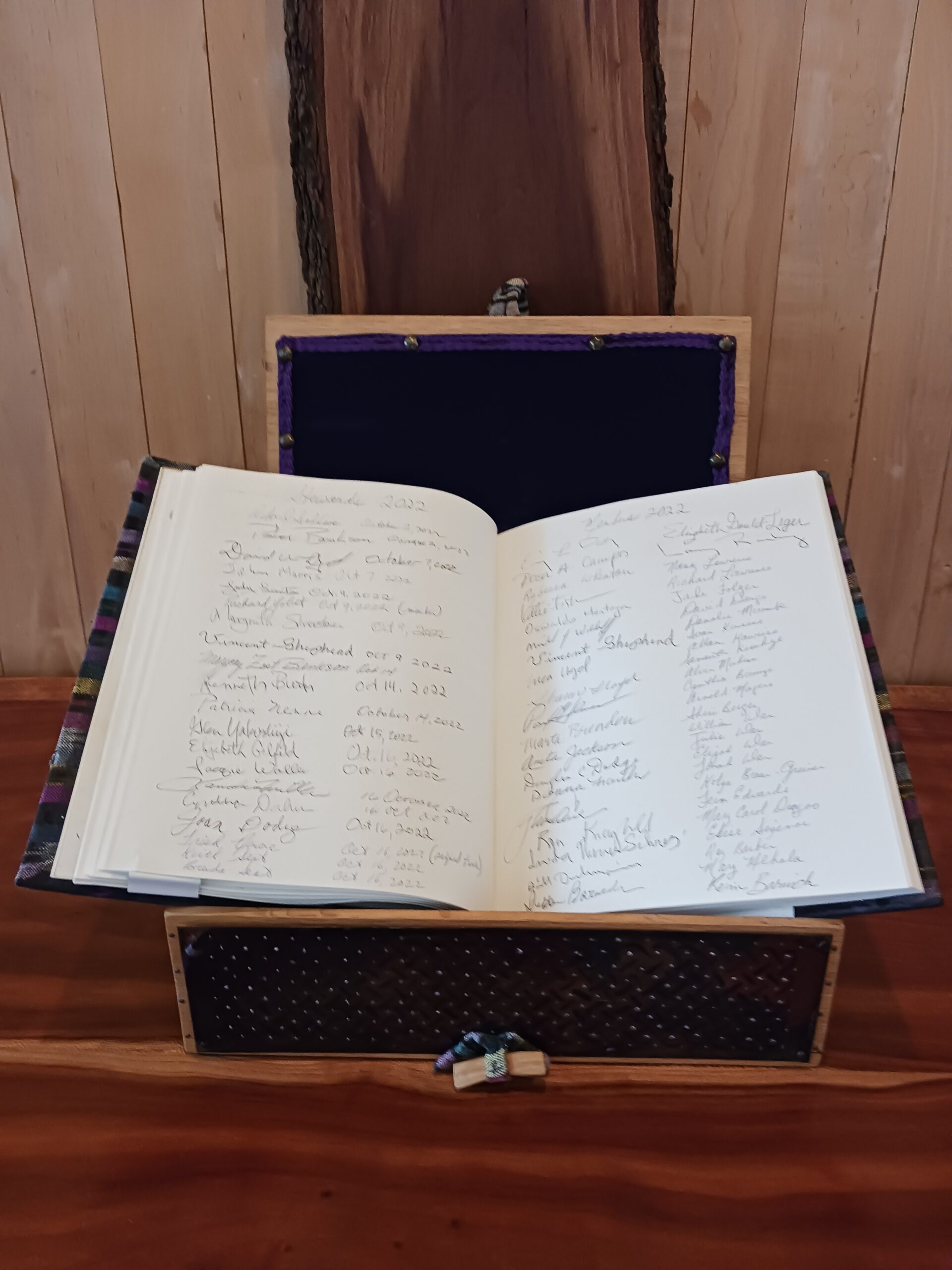
Today is Recommitment Sunday, a yearly practice at Seekers to keep our values and commitments conscious and fresh. As David Lloyd mentioned last week, yearly recommitment is part of our heritage from Church of the Saviour. The date, on the third Sunday of October, honors the first birthday of Church of the Saviour in 1947 and also the official start of Seekers in 1976.
That means we are now beginning our Jubilee Year, which marks 50 years as a separate church community AS WELL AS being one of seven Church of the Saviour communities. Remember, we are still incorporated as a single Church of the Saviour — held together by our common commitment to Christ, trust in the inward/outward journey together, the C of S Council, and by shared ownership of Dayspring – where many of us experience God in the lively rhythms of the natural world.
Last week, David described how belonging and commitment are interwoven, each deepening the other over time. He gave us this AI-generated description: “True commitment requires passion, a willingness to sacrifice, and demonstrates loyalty through actions rather than words, especially when faced with challenges.” That can be a high bar.
At Seekers, we recognize that such a true commitment takes time and effort. Some of us are more cautious than others, more hesitant to claim belonging, or trust that we have something needed by this community, so we begin with wanting to be intentional about our spiritual life the Member’s Commitment. Hopefully, that includes everybody here.
Member’s Commitment Statement
The Member’s Commitment Statement requires only that one wants to be intentional about our spiritual lives and how we put that into action. It’s a statement of individual intention. Unlike many churches, there is no credal statement of belief and no required class for new members. We trust that belonging and commitment will grow together if this is the right place to learn more about loving God and loving our neighbors as ourselves. We know It takes time to trust the commitments of others to BE community in the truest sense.
The Member’s Commitment also signals that we don’t have to earn our right to be here, to participate in the worship life on Sunday or take a class in the School of Christian Growth –or share our doubts about God or faith. Being a member here is an invitation to bring your whole self into this sacred circle.
Beyond that individual commitment, some are called to care for the whole community as Stewards. Becoming a Steward is open to all, but that’s where “true commitment” is needed. We could not sustain our wide welcome without a committed core, willing and able to give the necessary time and effort that shared leadership requires.
Children’s Commitment Statement
Part of our recommitment preparation is to spend an hour here in the sanctuary, pondering our call. In the hour that I spent doing that on silent retreat, I was drawn to the children’s commitment statement – which says what I believe in plain language. Here’s what the children promise:
- To learn about God by coming to this church;
- To take care of the air, water and earth, and love the plants, trees, animals, birds and fish;
- To love and respect my body;
- To help people who don’t have much money;
- To try to get along with my family, my friends and others; and
- To say “yes” to God as I grow.
Over the years, “learning about God” has evolved to include serious biblical study, teaching, preaching and listening to others speak of their experiences as a spiritual companion. Learning to know God has also included some awesome direct experiences of rescue and revelation. I feel that now when my hands get very warm during prayer or hearing someone else’s story. I know God is clearly present.
Next, “Caring for the air, water and earth” has become more intimate, more enveloping for me. I know now that we are walking on holy ground, drinking miraculous water, breathing sanctified air, and savoring life itself as a gift. Now I understand our lives as part of the shimmering web of life, part of God’s unfolding story of creation AND as a cell in the very body of God – mystic and mortal at the same time.
Next, the notion that “loving and respecting my body” would be part of my church commitment was new to me in the early days. I am old enough to have felt the “wounds of discrimination” for simply being female, but Seekers has given me a chance to explore my gifts, offer leadership sometimes, and practice loving others as I learned to love myself. And so, as we became conscious of sexual and gender variations within Seekers, we already loved one another enough to embrace those differences. ALL of us belong here, with gifts to share and different calls to support.
“Helping people who don’t have much money” was also a starting place to move from charity giving to repairing the wounds of injustice through our collective outreach. We discovered that sharing income and wealth information was even more taboo than discussing sexuality, and in the years of financing the purchase and renovation of this building ourselves, we learned to trust the generosity of this community in many practical ways. Now we can offer this building as a ministry of place as well as giving money where Seekers are already personally involved. Seeing money as a spiritual issue opened my heart in new ways.
Finally, over the years, “getting along with family, friends and others” deepened into sacrificial commitment to stay engaged even when we had serious disagreements. It turns out that, like a marriage, the easy words of commitment do indeed require sacrifice, introspection, sorrow, and forgiveness along with laughter, song and celebration. But all of that contributes to confidence that we can find a way through our fears and frustrations toward being the person we were intended to be.
As you can hear, this year the children’s commitment statement has been a rich point of reflection for me as I pondered recommitment to Seekers.
Stewards Commitment Statement
The Stewards’ commitment makes that inner growth public. It does contain a statement of belief in God, the importance of Jesus, and the presence of God’s Spirit. Stewards also commit to share responsibility for the spiritual growth of all persons in Seekers AND take responsibility for the organizational health of Seekers Church.
Taking responsibility for the spiritual growth of others and for the organizational health of our community makes our practice of shared leadership possible. We have no paid professional clergy to do the work for us. We ask Stewards to give their time and money and experience to keep this community healthy and engaged. Without that commitment, it’s too easy to come only when it’s convenient, give only when you feel generous, and clean up only when somebody asks for help. Stewards hold the structure so we can have a wide and inclusive welcome for all who are drawn to this kind of faith community. Persistence and practice matter.
And that brings me to the text for today. Known as The Persistent Widow, Luke tells us plainly what the parable is about. He says “Then Jesus told them a parable about their need to pray always and not to lose heart.”
A widow comes to an uncaring judge with some matter of injustice. Already we know there is a power differential: she is marginal, with no social or economic influence, and by his own admission, the judge has no respect for her or for God. In other words, there is no spiritual leverage on him, but because the woman is relentless in repeating her request, the judge grants her request.
Now comes the interesting part. As it stands, the parable takes the ancient form that Jesus often uses: The culture says one thing, but I say another. For example, the culture says “an eye for an eye,” but I say “love your neighbor; do good to those who hate you.”
In this parable, the culture says “persistence pays off” but Jesus says “God will bring swift justice because that is God’s nature.”
Luke says the parable is about being persistent in prayer, but it seems to be about the nature of God, so we are left with the question: Why then is our persistence needed?
I think the key to this parable lies in the last line, which I almost missed. It says “And yet, when the Son of Man comes, will he find faith on earth?”
There it is.
Persistence means practice. Practicing our faith. Making it real and effective. Putting faith into action.
Justice doesn’t only happen in a courtroom. It happens on the street, in a store, in schools and on the internet. As the prophet Micah reminds us, our call is always to “do justice, love mercy and walk humbly with God.”
A living faith is a matter of choosing love and respect again and again, of commitment and communities of practice, so we can keep growing – walking humbly with God. For that, we will need the persistence of this marginal woman no matter what our circumstances are. On this recommitment Sunday, it means growing from the simple commitment that the children make toward the complexity of a mature faith – which, in the end, boils down to “love one another as I have loved you.
May it be so. Amen.